


whitening products today than ever. Many users will ask, however, does whitening toothpaste work? Most of the brands available will indicate whitening of teeth in as little as a few weeks. So, first things first, let’s define what whitening toothpaste is and what the user can expect, and forewarn about results.
The straightforward answer is yes; whitening toothpaste does indeed work, although the degree of effectiveness is going to be influenced by multiple factors including the type of stain (extrinsic vs intrinsic); what the toothpaste contains; and the frequency of use of the whitening toothpaste. If you are in the market for a whitening product it is worthwhile to understand what whitening toothpaste does in practice; and importantly too how it compares to other whitening modalities available to you today.
You might be interested in understanding the average cost of braces. We have made an informative article on this topic as well.
How Does Whitening Toothpaste Work to Remove Stains
It is useful to learn how whitening toothpaste works to understand how effective it is. Most whitening toothpaste consists of a combination of low-abrasive and polishing agents. These abrasives scrape and remove surface stains from coffee, tea, wine and smoking, or food pigments.Some formulations have more whitening agents like hydrogen peroxide or carbamide peroxide, however usually in very low concentrations.
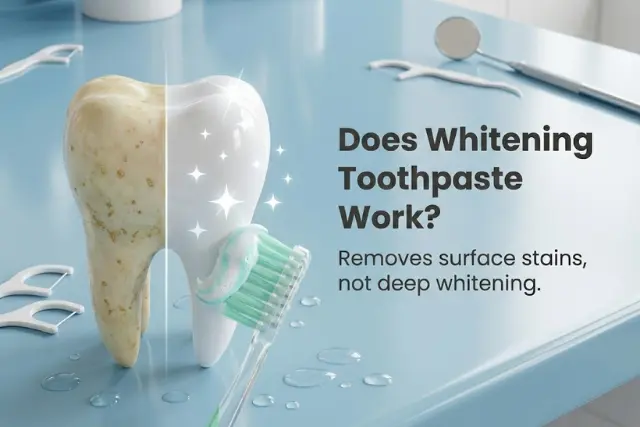
These whitening agents whiten teeth over time, but it is important to note while whitening toothpaste can work, it does not bleach the underlying layers of the tooth. Whitening toothpaste is mostly to remove stains and reduce staining on the teeth.This means that a whitening toothpaste is largely a maintenance type of toothpaste but it will not drastically change the color of your teeth other than remove stains on the surface.
As you are evaluating the different toothpaste options, many people are going to be asking what is the best toothpaste for whitening, and generally this means a whitening toothpaste that is effective and/or safe that is possibly a mild abrasive or a mild peroxide based whitening agent.
Key Ingredients That Influence Whitening Strength
There is a wide range of differences between whitening toothpastes based on the formula used to create them. When it comes to removing stains, chemical agents like hydrated silica, activated charcoal, baking soda, or a low-level peroxide can help.Toothpastes that contain these agents are some of the best toothpaste for whitening since they polish the teeth but are not supposed to wear down tooth enamel!
Activated charcoal is a very popular ingredient and may be too abrasive if too much is used. Peroxide-based toothpaste incorporates mild bleaching, but you need to brush daily with the peroxide-containing toothpaste so you can see the results between an in-office professional bleaching procedure and the best toothpaste for whitening is intended to be used on the surface stains emerging from your whitening toothpaste.
What Results You Should Expect from Whitening Toothpaste
Even the best toothpaste whitening product will have limitations. Whitening toothpaste can typically lighten teeth by a shade or two over the course of a few weeks – but it depends on whether the stains are on the surface of the tooth (extrinsic stains). Intrinsic stains that are seen from genetics, medication usage, trauma, and aging, will need professional treatment.
At this point let’s answer the final question of does whitening toothpaste work, lets concentrate on the best results possible for whitening toothpaste – they will work best on surface stains but will not work well on intrinsic stains – which are required to be treated with an in-office professional product and not allowed to use a toothpaste whitening product.
Does Whitening Toothpaste Work Better Than Professional Whitening?
Another of the most common topics is whether at-home whitening is as effective as in-office professional whitening. This is a great topic to have, because whitening toothpaste is available at retail, intended for day-to-day use, convenient, and very economical.The reality is, professional whitening is much more potent because it utilizes higher quantities of the bleaching agent, that is, hydrogen peroxide.
Whitening toothpaste takes weeks just to exhibit minor effects, while professional whitening can brighten your teeth by several shades through a single visit, which is insightful to address to make clear expectations, and address is whitening toothpaste just as effective as professional whitening.
Whitening Toothpaste vs Professional Whitening Comparison:
| Feature | Whitening Toothpaste | Professional Whitening |
| Removes surface stains | ✔ Yes | ✔ Yes |
| Removes deep stains | ✖ No | ✔ Yes |
| Whitening strength | Mild | Strong |
| Speed of results | Slow | Fast |
| Cost | Low | High |
| Daily use | ✔ Safe | ✖ Not intended for daily use |
How Does Whitening Toothpaste Work When Choosing the Right Product?
Selecting the best toothpaste for whitening teeth, isn’t simply about brand names but about ingredients, safety and efficacy. Here is what you want to look for:
- Look for ADA approved or dentist recommended formulas.
- Choose low abrasion properties for sensitive teeth
- Gentle abrasives: This helps with enamel wear from overuse, enhancing the whitening capabilities without concern.
- Peroxide or baking soda: This helps gently remove deeper stains from teeth.
- Sensitivity: If you have sensitivity, look for something mild.
Most of the best toothpaste for whitening will combine stain fighting, enamel protection and freshness in a total oral care product.
Does Whitening Toothpaste Work for All Types of Stains?
It all depends on the source. If your teeth are discolored due to beverages, food, or smoking, then whiteners in toothpaste may improve brightness quite clearly. Discoloration caused by: your teeth’s natural structure, medications, and natural aging will get much less improvement from whitening toothpaste.
So does whitening toothpaste work? Yes, but within limits. It serves a purpose, maintaining your smile and gently whitening the surface of your teeth, but it will not make dramatic results.
People with deep stains often require:
- Whitening strips
- LED whitening kits
- Professional dental whitening
- Veneers (in severe cases)
Conclusion
So, in conclusion, does whitening toothpaste work? Yes, to a degree. Whitening toothpaste removes surface stains, contributes to a bright smile, and prevents more superficial stains, but it does not penetrate the tooth to bleach stains into deep stains, and will not change tooth color to the extent we see with in-office products.
That being said, regular use of the correct formulation may improve the appearance of your smile. The best toothpaste for whitening teeth provides peace of mind regarding the effectiveness, safety, and reliability if used over a long-range plan.
Frequently Asked Questions (FAQs)
1. Does whitening toothpaste help yellow or stained teeth?
Yes, again mainly if the stains are extrinsic or surface based, rather than deeper stains.
2. How often should I use whitening toothpaste?
In a perfect world, you would brush after each meal but over brushing can cause your gums to hurt, but brushing in general, is preferred over brushing less frequently.
3. Can whitening toothpaste assist with tartar control?
Whitening toothpaste is ONLY going to get rid of stains on your teeth, it won’t help decrease tartar. While some whitening toothpaste may contain tartar controlling ingredients, you STILL need to see your dental hygienist for regular cleanings.
4. Is whitening toothpaste the best?
This is a personal matter depending on the needs of the person, but peroxides and silica based whitening toothpaste are relatively standard lines for an effective product.
5. Will whitening toothpaste damage enamel?
Not if you do proper use and choose an enamel safe toothpaste. Just avoid highly-abrasive products and toothpaste with charcoal.

